Last updated November 22, 2026
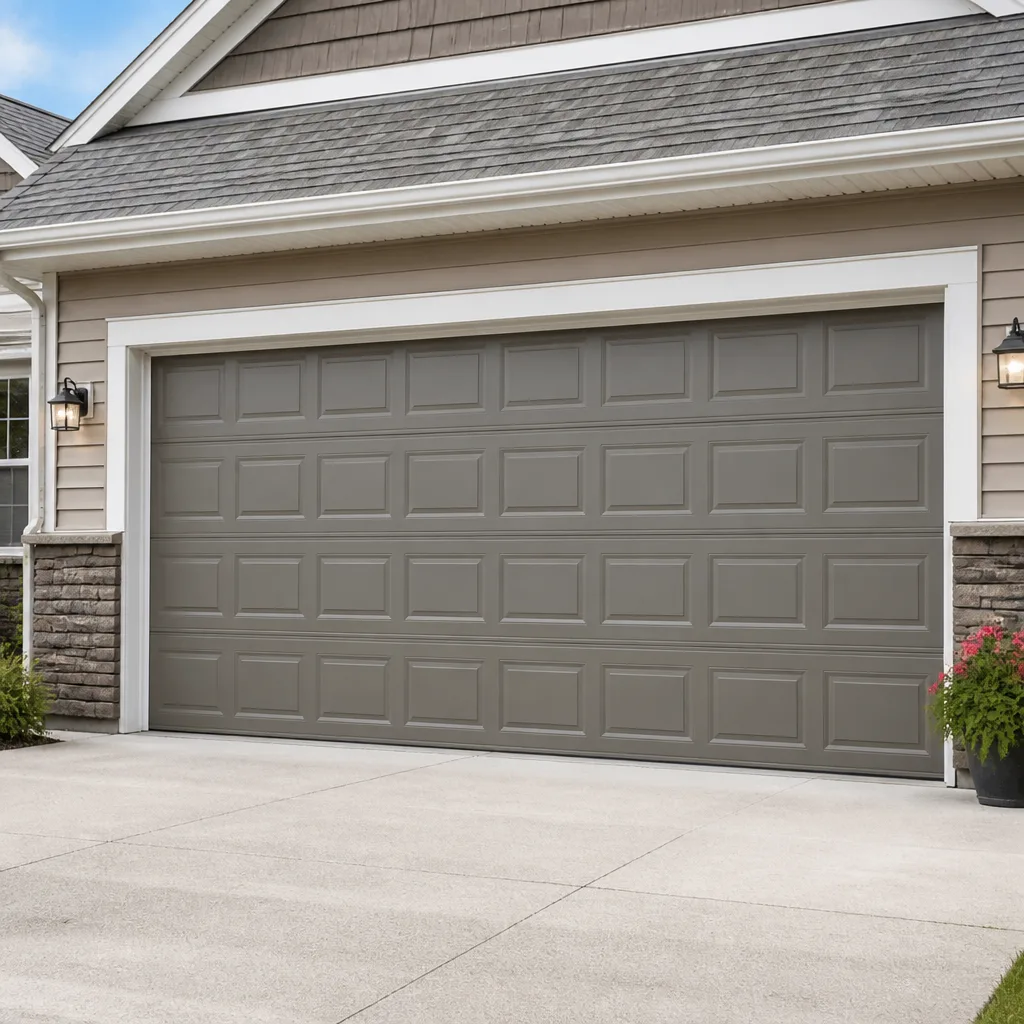 Raised-panel steel
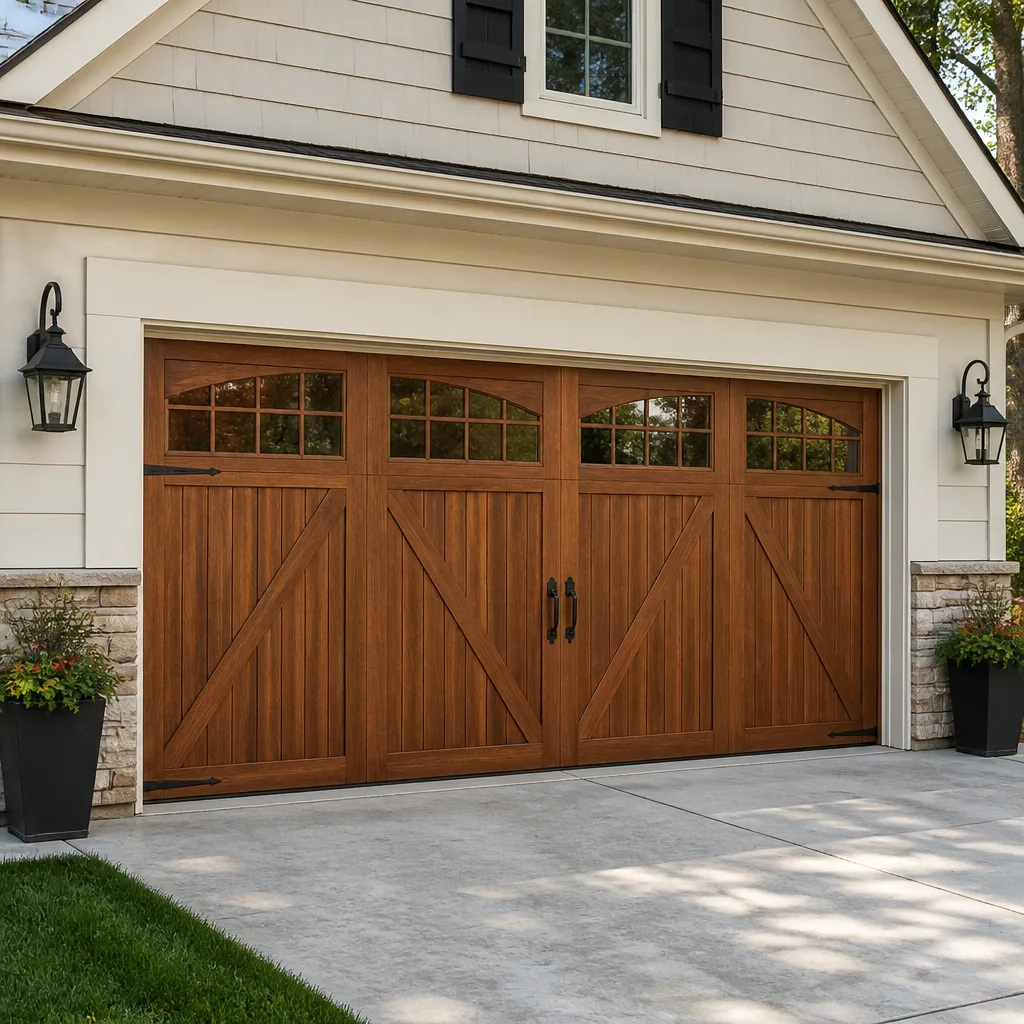 Carriage house
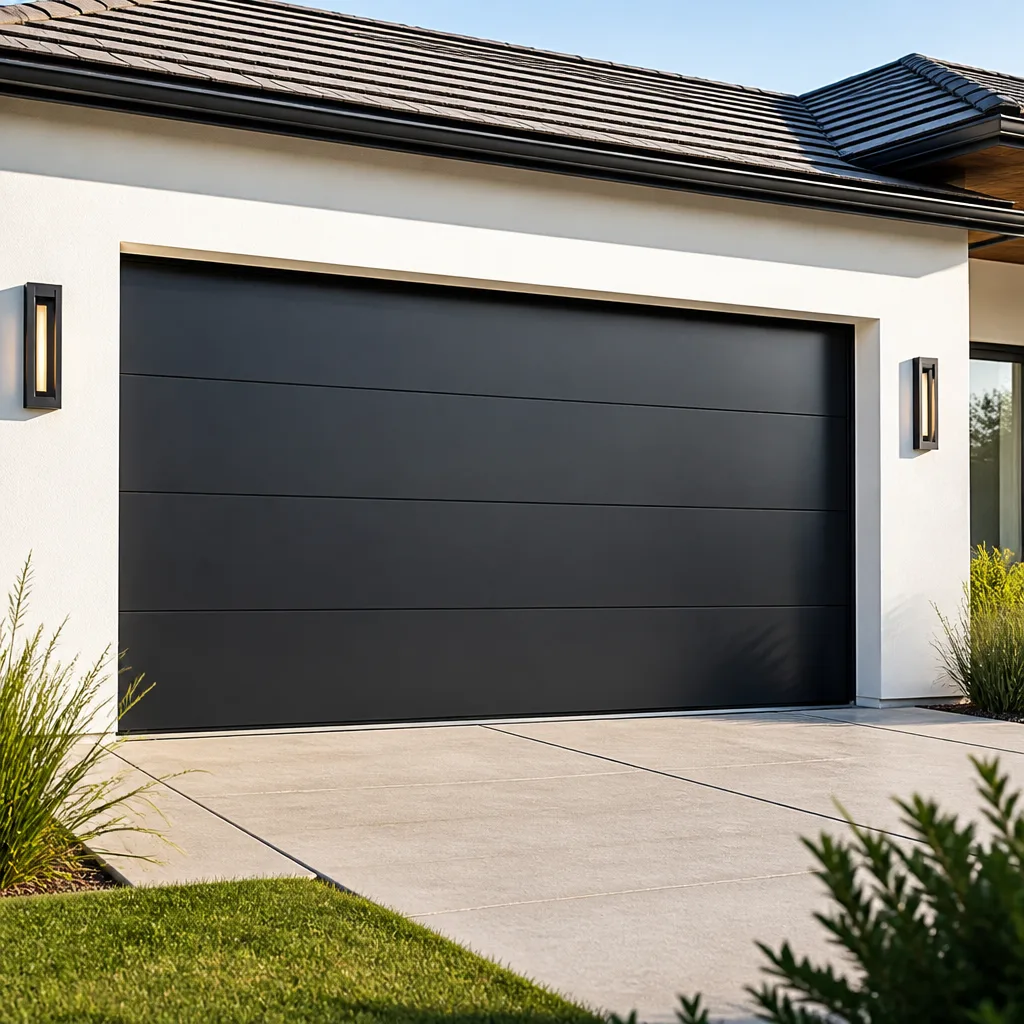 Modern flush
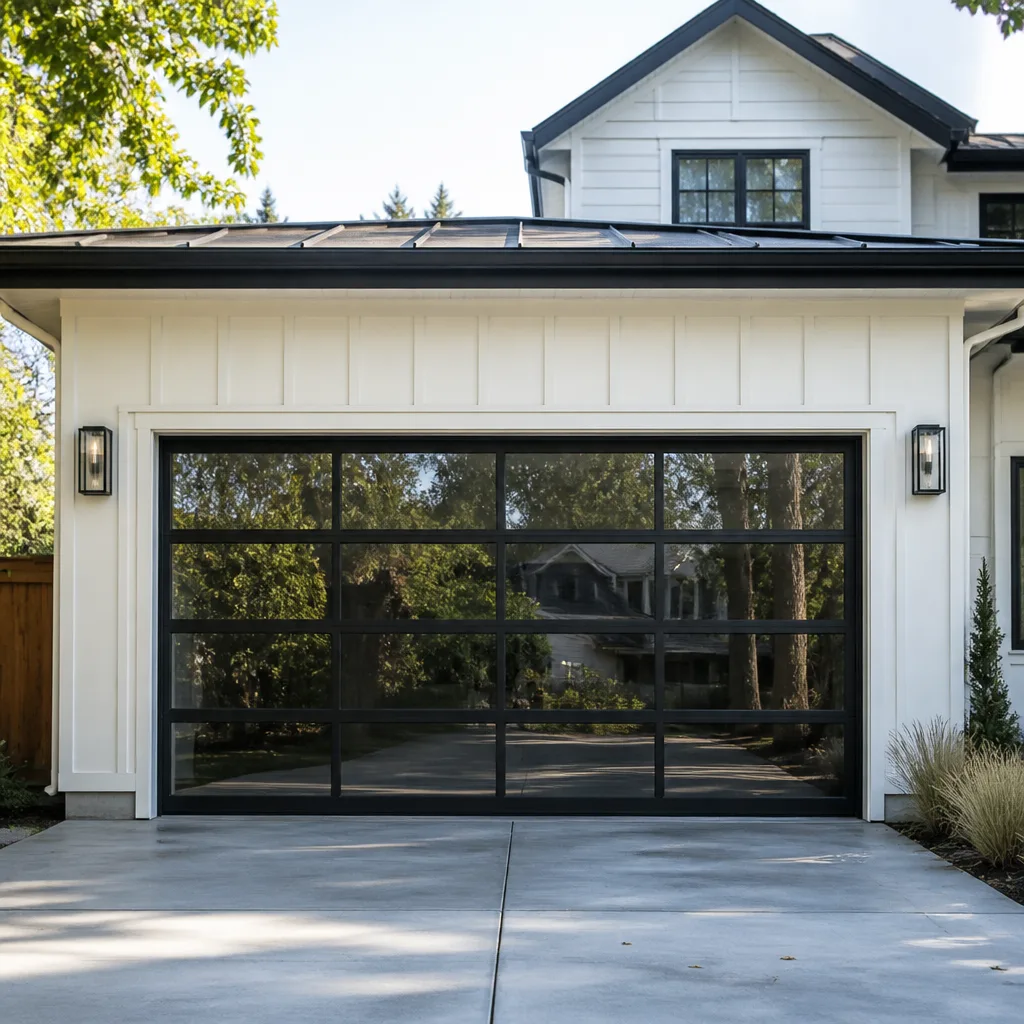 Full-view glass
 LiftMaster openers
 Chamberlain openers
Full 25-point door and opener safety check with every visit - springs, cables, rollers, tracks, and your LiftMaster or Chamberlain opener included
You get a price before we start. It does not change when the pro arrives.
Get your free estimateGarage Door Warning Signs: A St. Charles Homeowner’s Reference Guide
A grinding noise when the door opens isn’t always the opener. In our experience, roughly four in ten grinding complaints trace to a roller that’s lost its nylon coating and is now running metal-on-metal inside the track. Those two repairs cost very different amounts and carry very different urgency. That gap is the whole problem: a garage door tells you it’s failing long before it quits, but most homeowners can’t tell a cosmetic squeak from a symptom that’s a week away from a door stuck halfway down. This guide maps the sound, the movement, the visual cue, and the sluggish response to the specific cause behind each one, so you can triage instead of panic. St. Charles winters give us a useful test case throughout.
Quick Answer
Garage door warning signs fall into four groups – sound, movement, visual condition, and opener response – and each points to a different set of causes. Squealing and slow response are usually safe to monitor for a short while; fraying cables, a door that’s come off its track, and a visible gap in a torsion spring need service within the week, not next season. A door that lifts unevenly or reverses for no reason is the one to call about today.
Styles & brands we work with
- Raised-panel steel
- Carriage house
- Modern flush
- Full-view glass
- LiftMaster openers
- Chamberlain openers
Table of Contents
- The symptom-to-cause matrix: what each warning sign actually means
- Safe to monitor vs. same-week repairs
- The 60-second test that separates opener problems from door problems
- Winter false alarms in St. Charles: when a struggling door isn’t broken
- The two signs that always come before a torsion spring breaks
- Cables, tracks, and rollers: which damage you can see and which you can’t
- A step-by-step walk-through you can run this weekend
- Opener distress signals: what the lights and clicks are telling you
The symptom-to-cause matrix: what each warning sign actually means
Most garage door guides list symptoms in one long pile. That’s not how diagnosis works. What matters is which symptom points to which component, because that decides whether you’re looking at a $20 part or a repair that stops the door from working entirely. Here’s how we sort the common complaints we hear from St. Charles homeowners.
- A grinding or scraping sound while the door travels: usually a worn roller or a track that’s bent enough to catch the roller edge. Less often, a dry hinge, or a bearing plate that’s running dry inside the opener head.
- A sharp bang from above the door, once, then quiet: classically a torsion spring letting go. If the door still opens but feels heavier, stop using the opener and treat it as a spring issue, not an opener issue.
- Rattling that’s louder on one side: loose hardware – hinges, brackets, the bolts that hold the track to the jamb. Sometimes a panel that’s worked loose at its stile.
- An uneven lift, one side higher than the other: cable tension, a stretched spring, or a roller jumped out of the track. This is the “don’t wait” category.
- Door reverses before it touches the floor: the safety reversal system is triggering. Could be a misaligned photo-eye, a down-limit out of adjustment, or an obstruction you can’t see.
- Slow, labored, or intermittent opener response: often the opener’s logic board, the wall button wiring, or a stepper drive that’s aging out – more on how to sort these under the diagnostic test below.
What’s useful about sorting by symptom is that you can describe the issue accurately when you call, which shortens the diagnostic visit and gets you the right parts on the first trip. We work with Clopay, Amarr, and Wayne Dalton sections, plus LiftMaster and Chamberlain openers, so we recognize how each brand fails rather than guessing at a generic cause.
Safe to monitor vs. same-week repairs
The single most useful skill in garage door maintenance is knowing the difference. A squeaking door is annoying; a fraying cable is dangerous. Our rule of thumb below keeps things simple.
Safe to monitor for a short while
- Squeaking or mild grinding on hinges and rollers – fresh lubrication usually settles it, and it won’t fail suddenly.
- Rattling hardware on a door that still tracks straight and level.
- Slow opener response when the wall remote also feels weak (often the battery or the wall-station wiring, not the door).
- A single, isolated reversal that doesn’t repeat – check the photo-eye alignment and the floor for obstruction first.
Call within the week
- A cable with visible fraying, kinks, or bunching at either drum. Cables are under high tension, and a snapped cable can let the door drop or jump the track.
- A door that’s come off its track on one side. Don’t run the opener on it – the opener will pull it further out.
- A visible gap in the torsion spring above the door, or a spring that’s bowed.
- A door that lifts unevenly or hangs crooked at the halfway point.
- Any door that reverses repeatedly or refuses to close reliably.
If you’re not sure which bucket a symptom falls into, call us at (888) 778-7498 and describe it – we’d rather talk you through the triage than have you wait on a cable. Our garage door repair team handles both the small and the serious end of that list.
The 60-second test that separates opener problems from door problems
Before you call anyone, run this test. It tells you whether the problem lives in the opener or in the mechanical door, and it saves a diagnostic visit on a door that doesn’t need one.
- Pull the emergency release. With the door fully closed, pull the red cord on the opener rail. This disconnects the door from the opener and puts you in manual mode.
- Lift the door by hand. A balanced door should move up smoothly with light effort, stay open on its own about halfway, and take only a light pull to come back down. If you’re pushing hard or the door sinks on its own, the problem is the door – springs, cables, or balance – not the opener.
- Press the wall button with the door still disconnected. If the carriage or trolley runs smoothly along the rail, the opener is mechanically healthy. If it grinds, stalls, or the light flashes without movement, the opener is the problem.
- Reconnect by hand with the door fully closed – the carriage should snap back onto the trolley carrier. If the door is off-track or won’t close cleanly, don’t run the opener; call for service.
Most homeowners skip this test and guess. Nine times out of ten, the guess is wrong because the symptoms of an opener problem and a door problem overlap – a straining opener often looks like an opener failure when the door is simply too heavy to lift. This is our single biggest time-saver on a first visit. If you’ve run the test and the opener is the suspect, our garage door opener repair page covers what follows in more detail.
Winter false alarms in St. Charles: when a struggling door isn’t broken
A door that groans in January isn’t necessarily failing. St. Charles winters bring long stretches of sub-freezing nights, and cold changes how every part of the system behaves. Knowing which behaviors are weather and which are real keeps you off the phone for nothing.
Lubricant thickens at low temperatures, so hinges and rollers that were quiet in autumn get stiff. Tracks can contract just enough to pinch a roller. Weatherstripping stiffens and can stick to the concrete as ice forms at the threshold. And photo-eye lenses fog over or collect condensation, which can trigger a false reversal. All of those are reversible with a warm day, a wipe-down, and a fresh application of a low-temperature white lithium grease on the moving parts (never on the tracks themselves, and never on the spring).
What genuinely fails more often in the cold: springs. A torsion spring that’s been carrying load all year can snap on the first cold morning. If the door worked yesterday and today won’t open at all, or you heard a single sharp bang from the ceiliing, that’s the spring, not the weather. Second, a cold-stiffened door can overload an aging opener and burn out its logic board – if the opener hums but the door doesn’t move, stop pressing the button.
What’s not a false alarm: a cable that’s visibly kinked in the cold, a panel that’s bowed from freezing moisture, or a door that’s slow on one side only. Those need eyes on them. This is one reason we treat garage door spring repair as a safety-critical service rather than a general repair – the cold is exactly when springs pick their moment.
The two signs that always come before a torsion spring breaks
Springs give warning. Two warnings, specifically, and both are visible without disassembling anything.
The first is a visible gap. The torsion spring that sits above the door winds around a steel shaft. When it’s healthy, you can’t see space between the coils. When it’s failing, a coil at one end stretches or snaps – and if the door still opens when you check, you’re seeing the remaining coils carrying load they weren’t designed for. That’s a door that’s a week away from not opening, and in some cases a day.
The second is a change in effort. The door suddenly feels heavier when you lift it by hand with the opener disconnected, or the opener strains audibly at the beginning of a cycle. Springs lose tension gradually before they break, and the loss of lifting power is the door getting heavier without telling you.
There’s a safety caveat we don’t apologize for repeating: do not attempt to adjust, wind, or replace a torsion spring yourself. Torsion springs are wound to hundreds of pounds of stored tension, and a slipped winding bar can cause serious injury or worse. This is the one garage door repair that a trained professional should always do, and it’s why we run it as a dedicated service rather than folding it into general repair. If you see either warning sign, treat the door as heavy and unsafe. Don’t prop it open – call us at (888) 778-7498.
Cables, tracks, and rollers: which damage you can see and which you can’t
Visual inspection catches more than most homeowners think, but you need to know where to look. Here’s how we divide the door visually, and what to check in each region.
- Cables (each side): a healthy cable is taut, riding neatly in its drum at the top corner. Look for fraying like a worn rope, kinks, or bunching on the drum. A cable that’s slipped off the drum has already failed – don’t run the door.
- Tracks (each side and overhead): run your eye along the edge. Dents, bends, or a track that’s pulled away from the jamb all count. A straight-edge on the curve at the top is the giveaway – that curve needs to be a smooth radius, and once it’s kinked, the rollers catch.
- Rollers: nylon-coated rollers should look smooth and black. A roller that’s worn down to bare metal, or is flat on one side, is the classic grinding culprit. If you hear grinding and the roller is discolored with rust streaks, that’s your answer.
- Panels: look for a bowed section, a horizontal crack at the stile, or bubbling paint – the last usually means moisture has gotten into a steel door section. Wood doors swell and crack at the joints.
- The bottom seal: flattened weatherstripping lets in cold air, water, and insects, and eventually allows the door to sit unevenly against the floor. Easy to spot, easy to replace.
We see all of these regularly in St. Charles on doors along the Fox River where the humidity runs a little higher in summer, and on older doors in neighborhoods where the original hardware has been in place a long time. Brand matters because panel and roller geometry varies between Clopay, Amarr, and Wayne Dalton sections – a roller that fits one won’t seat properly in another. That’s part of why we keep a breadth of brand expertise rather than a single line: the right fix, not a workaround.
A step-by-step walk-through you can run this weekend
Here’s the sequence we use on a first inspection, translated for a homeowner. It takes about fifteen minutes and covers everything visible without tools or disassembly.
- Listen before you look. Run the door once from fully closed. Note any grinding, scraping, banging, or rattling, and where in the travel it happens. That location tells us the component.
- Watch the door travel. Any wobble, unevenness, or hang-up at the halfway point is a track or balance issue, not a cosmetic one.
- Run the manual test above. Disconnect, lift by hand, check balance and effort.
- Inspect the cables and drums at the top corners. Note any fraying, kink, or bunching.
- Inspect the tracks along their full length. Check for bends, dents, and separation from the jamb.
- Inspect rollers and hinges. Note wear, flat spots, rust streaks.
- Check the torsion spring. Look for a visible gap between coils and for a bow.
- Check the bottom seal and the photo-eye lenses. Clean the lenses, check that the door seals evenly against the floor.
- Test the reverse function. Place a roll of paper towels (not your hand, not a pet) in the door’s path and press close – the door should reverse on contact.
Write down what you see in order. That list is the single most useful thing you can bring to a phone call or an estimate, because it lets us tell you which items are urgent, which are maintenance, and which are already scheduled for a future replacement. If your garage door repair St. Charles needs come up during this walk-through, that’s the right time to have the conversation.
Opener distress signals: what the lights and clicks are telling you
The opener talks to you in lights and clicks. Learning to read them narrows down the cause faster than anything else on this list.
- One flash, nothing happening: the opener is receiving the signal and refusing to move – almost always a safety sensor issue. Check the photo-eyes on each side are lit, aligned, and clean.
- Click, then hum, then nothing: the motor is getting power but the door isn’t moving. On a belt or chain drive, that’s usually the capacitor or logic board; on a screw drive, it can be the carriage. Either way, stop pressing the button – you’ll do more damage than diagnosis.
- Repeated clicking with no movement: a wall-station or safety-sensor wiring issue more often than the opener itself.
- Door runs but reverses before the floor: down-limit adjustment, sensor alignment, or an obstruction.
- Door reverses halfway up: usually the up-limit or an overload from a stiff door – check the manual test first.
- Wall remote works but the car remote doesn’t (or vice versa): the remote or the receiver, not the door.
Craftsman and Genie openers have their own diagnostic patterns, and if your system uses Wi-Fi control, the app can sometimes tell you more than the opener’s LED. We cover LiftMaster and Chamberlain smart systems, Craftsman and Genie legacy drives, and the app-side diagnostics that go with them, so a call about “the light blinks twice and it won’t close” usually resolves in one visit. If the opener does turn out to be finished, our installation team handles new hardware across multiple manufacturer lines, so there’s no second contractor to coordinate.
Common Mistakes to Avoid
- Pulling the emergency release on a door that’s off-track. Once the door is disconnected from the opener, a door with a broken spring or a jumped cable can drop with nothing holding it. Call for service before you pull.
- Repeatedly running the opener on a door that won’t open fully. If the door feels heavy, the opener is working hard against a failing spring – every cycle you run shortens the opener’s life too.
- Lubricating the tracks. Grease on the tracks attracts grit and packs into the rollers. The tracks should be clean and dry; the rollers, hinges, and bearings get the lubricant.
- Treating a grinding sound as “just the opener.” Wear on the rollers and the hinges produces most of what homeowners call opener noise. Diagnose before you replace.
- Assuming a winter slowdown means a new opener. Cold-thickened lubricant, stiff weatherstripping, and contracting tracks explain most St. Charles cold-morning complaints. Fresh low-temperature grease and a hinge check often cost nothing.
- Hiring a generalist for a torsion spring. Spring work is the most mechanically dangerous repair on a garage door, and it’s not a job for a handyman who also hangs drywall. Ask specifically about spring experience.
- Watching a bending door without noting when it happens. A door that hangs only at the top, or only on one side, points at different components. Write it down before you call.
See the difference
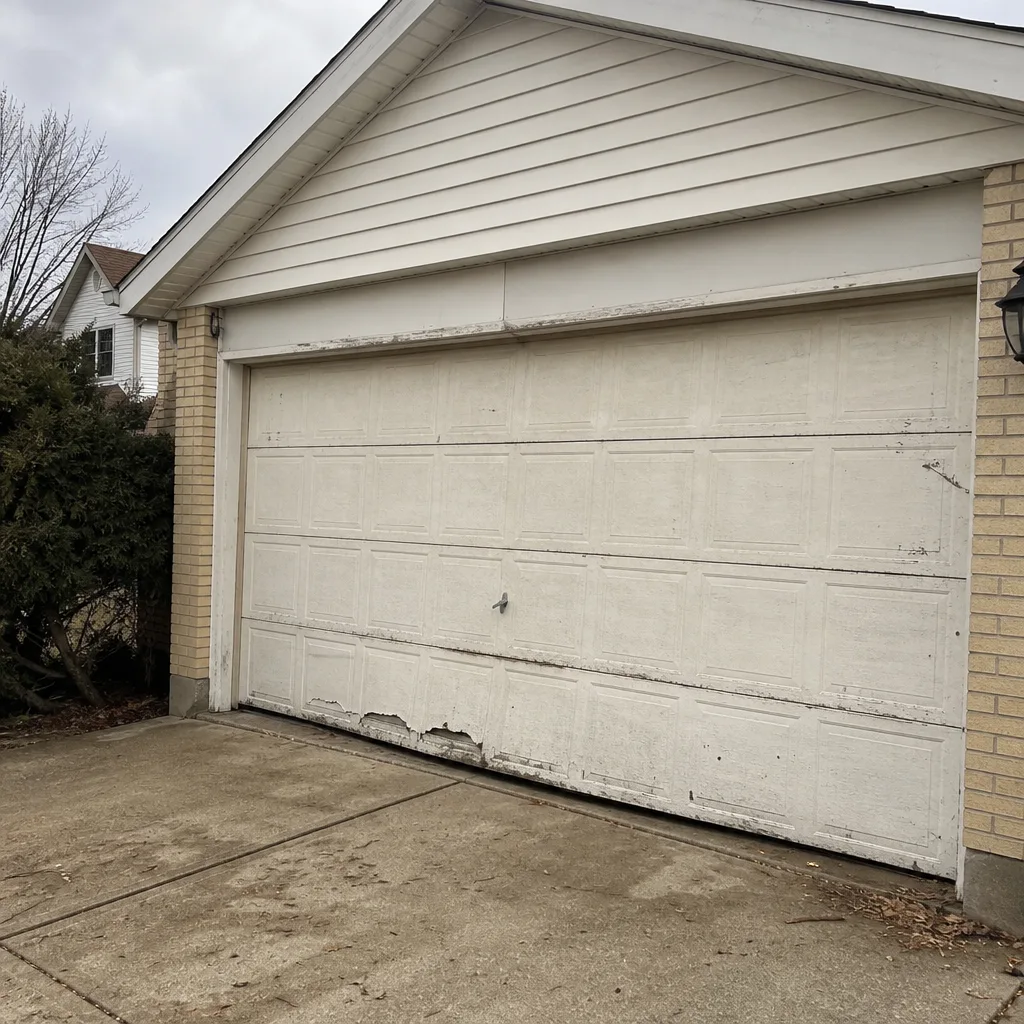 Before
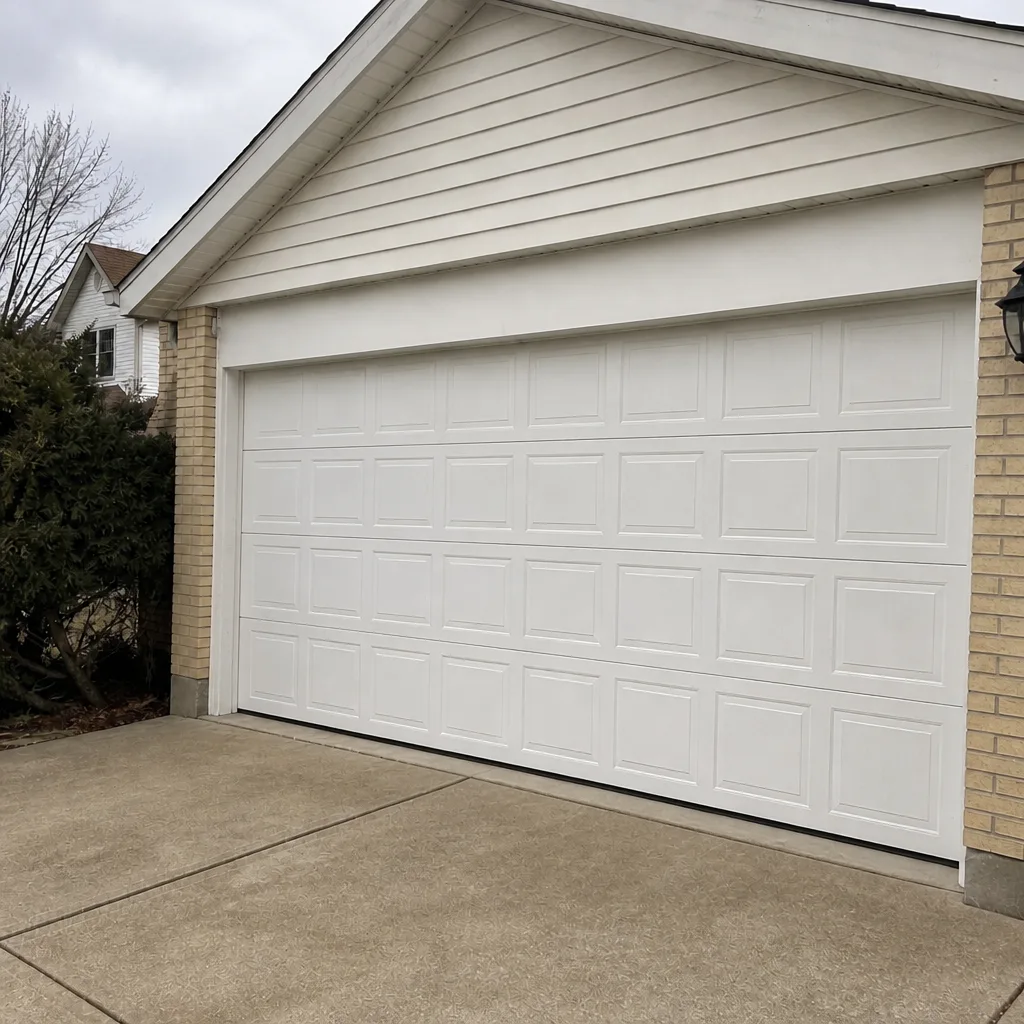 After
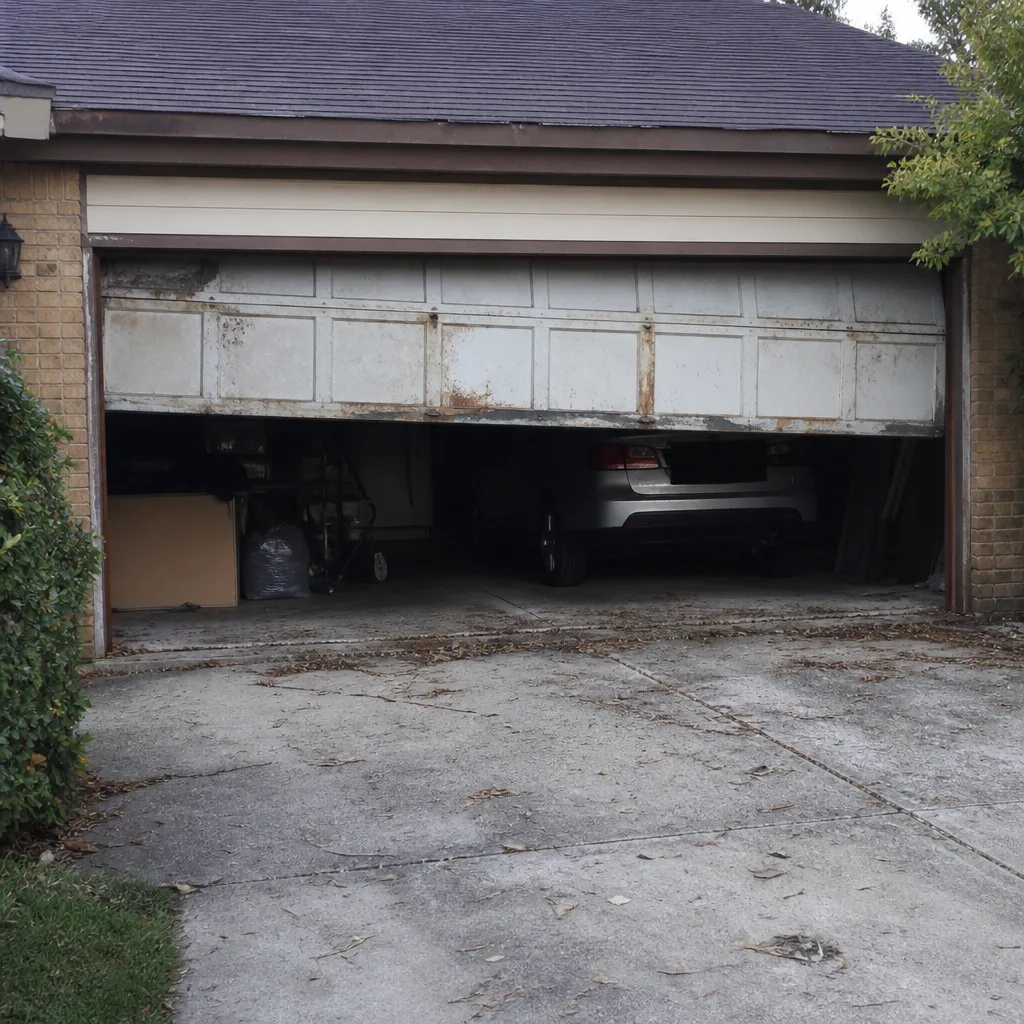 Before
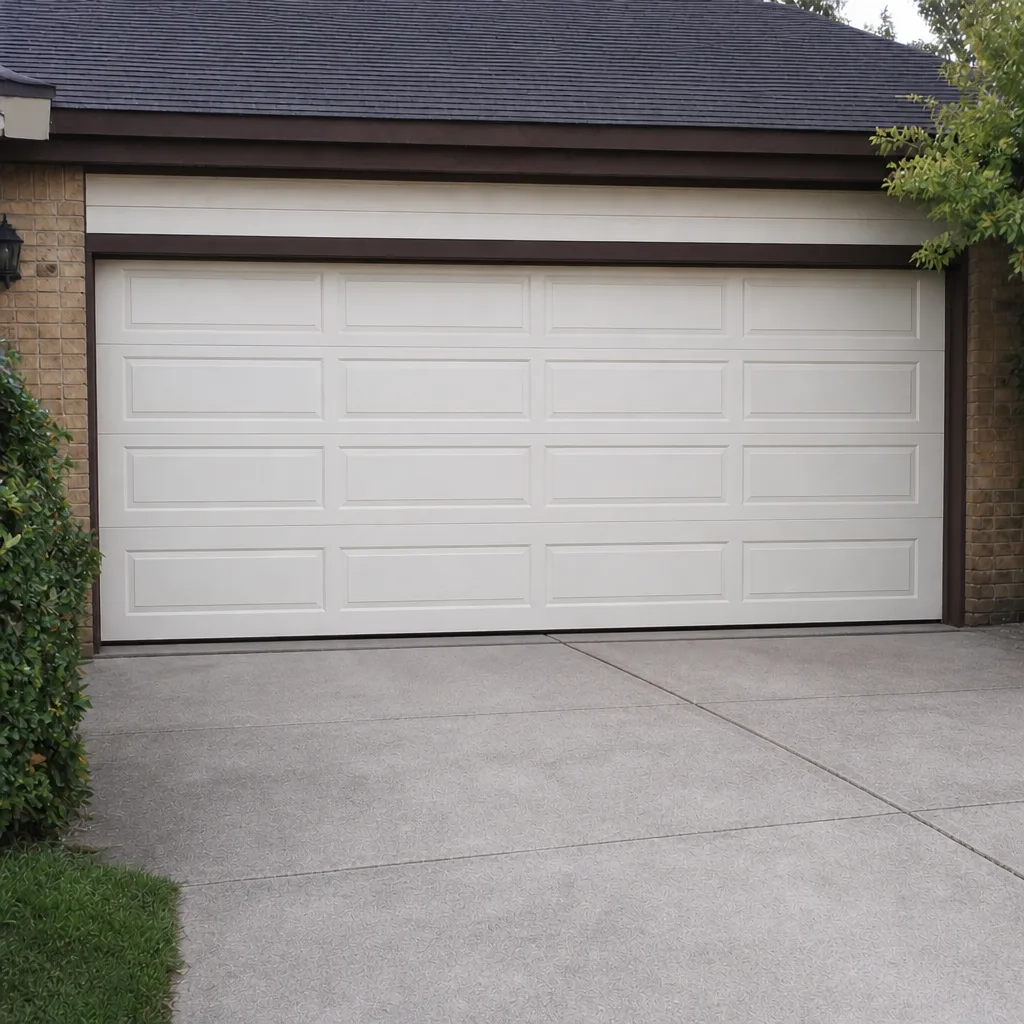 After
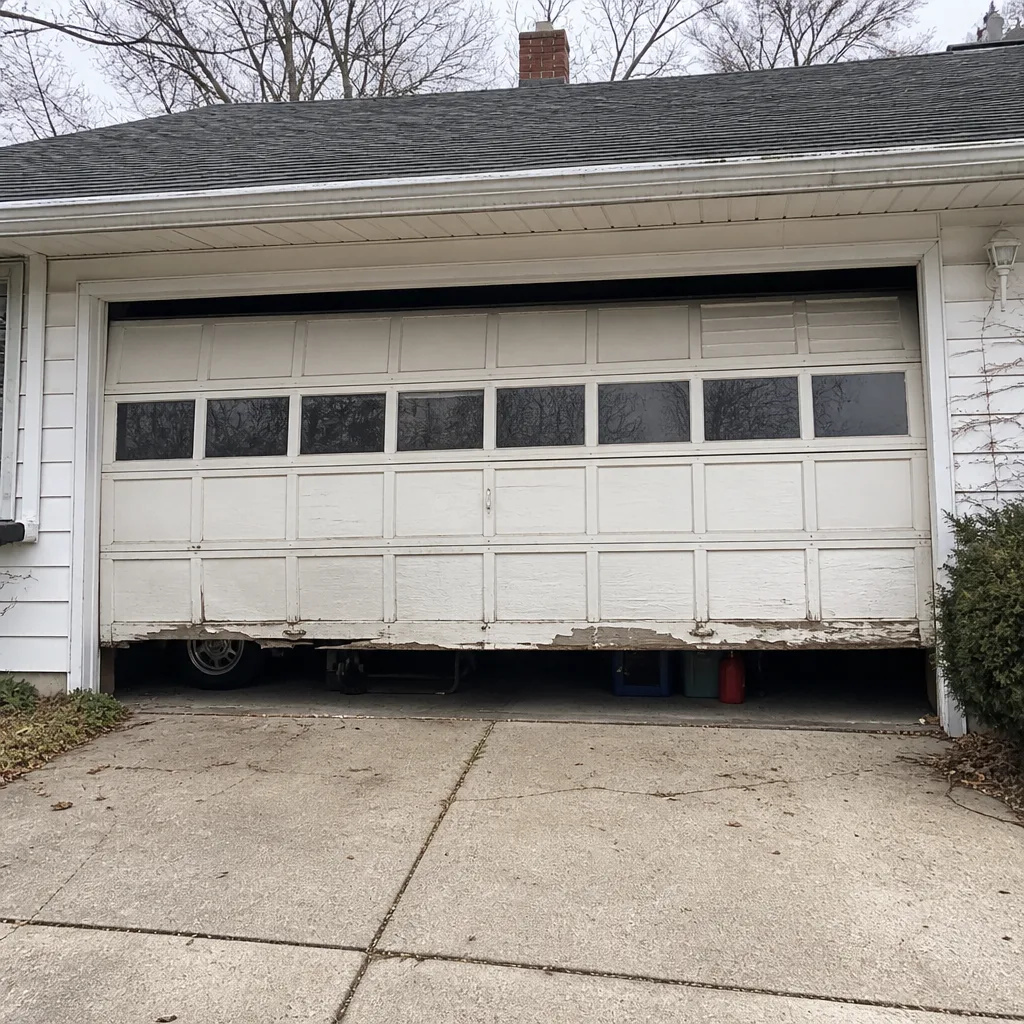 Before
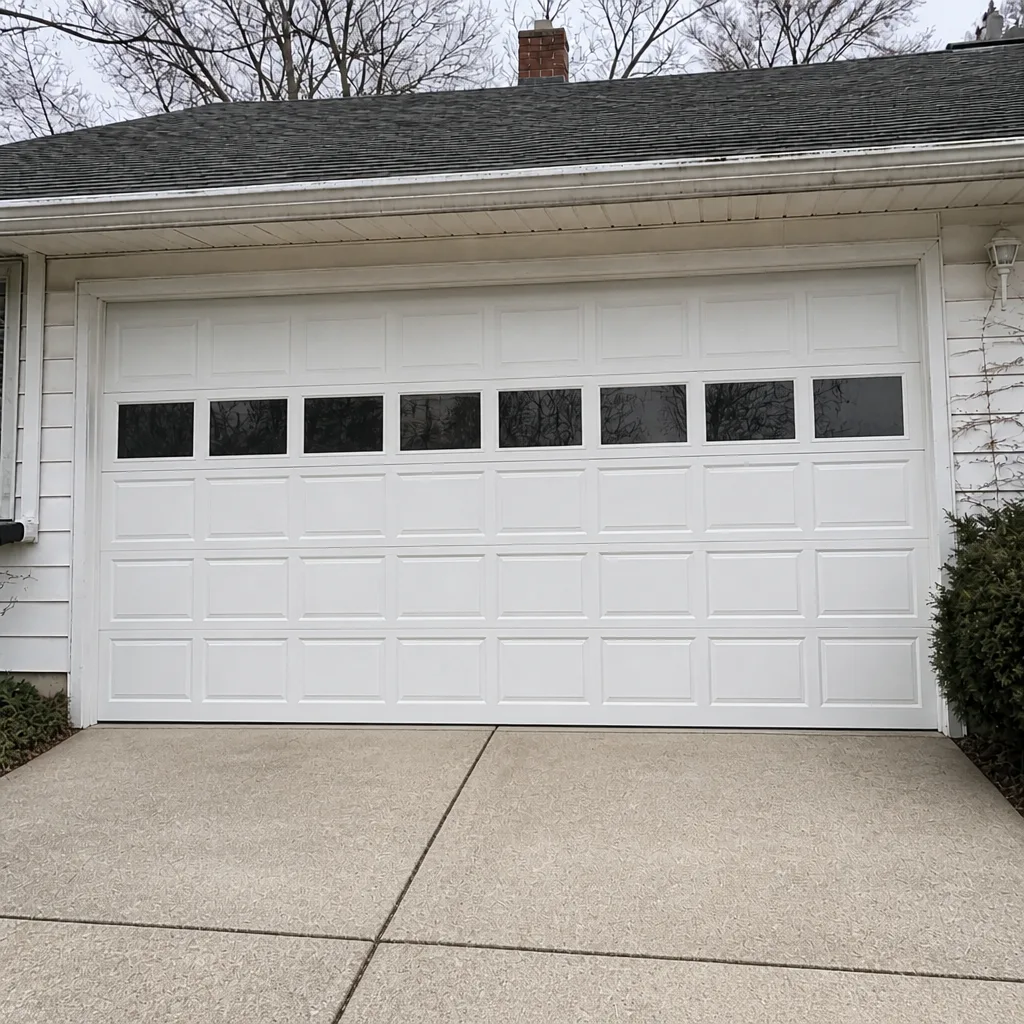 After
When to Call a Professional
Call us when you see any of the following: a visible gap or bow in the torsion spring, fraying or kinked cables, a door that’s come off its track, a door that lifts unevenly or reverses without cause, an opener that clicks or hums without moving the door, or any grinding you can’t trace to a specific roller or hinge. Those are the symptoms where a second visit costs more than a first one. If your door is currently stuck open and your home is unsecured, our emergency garage door service is a standing offering, not a premium tier – call (888) 778-7498 and describe the door. Garage Door Repair St. Charles Pros offers free estimates in St. Charles, and we quote and agree a price before any work starts. Our technicians have up to 14 years of experience, and we work on LiftMaster, Chamberlain, Genie, Clopay, Amarr, Wayne Dalton, Craftsman, and Raynor products.
Frequently Asked Questions
The first sign is a visible gap between the coils of the torsion spring, or a spring that’s started to bow. The second is a sudden change in how heavy the door feels when you lift it by hand with the opener disconnected. Either sign means the door is unsafe to operate and should be serviced before it fails completely. Call (888) 778-7498 – estimates are free.
Pull the emergency release and try lifting the door by hand: if it’s heavy or won’t stay open, the door is the problem; if the door lifts easily but the opener won’t move it, the opener is the problem. That single test sorts the cause in about sixty seconds. If you’re not sure which way it points, call (888) 778-7498 and we’ll walk you through it.
Usually not urgent, but worth tracing within a week or two. Grinding is most often a worn nylon roller running metal-on-metal, or a track that’s bent enough to catch the roller edge. Neither fails catastrophically, but both get worse, and both are cheap to fix early. Call (888) 778-7498 for an exact quote – estimates are free.
Cold thickens lubricant, stiffens weatherstripping, and contracts tracks, which together make a door harder to move. That’s normal for St. Charles winters and usually settled by low-temperature grease and a hinge check. If the door works fine in mild weather but fails to open at all on a cold morning, that’s more likely a failing spring – worth a call to (888) 778-7498.
The written estimate we give you is the price, and we quote and agree it before any work starts. If we open up a door and find something the estimate didn’t cover, we stop and come back to you with the revised scope before doing anything further. Call (888) 778-7498 to set up the estimate.
The local professionals we connect you with are licensed and insured as their state requires. Our technicians are experienced across all the major brands, and spring work is handled as a dedicated safety procedure rather than folded in with general repairs. Call (888) 778-7498 if you have questions about how a visit works.
The Bottom Line
Garage doors are honest. The grinding, the bang, the groan in January, the door that reverses at the last second – each of those points at a specific component with a specific urgency, and separating them is the whole skill. Monitor squeaks and slow responses. Book a call within the week for fraying cables, off-track doors, and a visible spring gap. Don’t touch a torsion spring yourself. And run the sixty-second manual test before you assume anything about the opener. St. Charles homeowners who learn to triage symptoms spend less, panic less, and keep the car out of the weather.
Written by the team at Garage Door Repair St. Charles Pros.